SURA-MAMA’s One Health Program strengthens the connection between people, animals, and the environment by empowering indigenous communities in Cameroon.
Enhance knowledge and capacity for local communities on “ONE HEALTH CONCEPT” for biodiversity wellbeing and conservation’ in Douala-Edea National Park (Mouanko)
CMR/SGP/OP7/Y3/STAR/BD/2022/11 November 2022 – April 2024
PROJECT OBJECTIVES
Objective 1
To increase the understanding and awareness of at least 70% of the communities neighbouring the Douala-Edea National Park by the end of the project through
Objective 2
To strengthen the knowledge and capacities of at least 30% of the population within the Douala-Edea protected area by improving community skills, building local relay systems, and promoting sustainable practices that support biodiversity conservation and public health.
education, sensitization campaigns, and community engagement on the One Health concept.
KEY ACTIVITIES AND INNOVATIONS
Objective 1 – Awareness and Sensitization
Activity 1.1: Development and Diffusion of Communication Tools
Communication materials such as flyers, posters, banners, roll-ups, audio-visual recordings, and videograms were developed to promote the One Health concept. Over 1000 people were directly sensitized and 500 indirectly reached through distributed materials. A total of 640 flyers and 300 additional flyers were produced and shared during the International One Health Day celebration in Mouanko. These tools illustrated the relationship between human actions, environmental health, and animal wellbeing. Posters remained displayed across communities, while videograms were shared via WhatsApp groups, social media platforms, and training sessions to encourage behavioural change and biodiversity conservation.
Activity 1.2: Organization of Sensitization Workshops on One Health
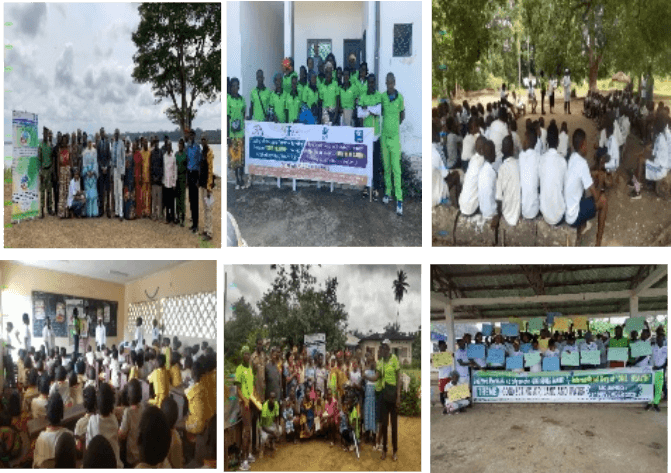
SURA-MAMA conducted sensitization sessions across several localities. During the first phase, 22 One Health community relay members were trained and organized into five focus groups: Youth, Education, FEYADI Women, RAFAMO Women, and FEDYLOB Women. Each visited village appointed two One Health focal points to sustain community outreach. Sensitization meetings were held in Lobethal, Yadibo, FEDYLOB Women Association, and Quartier Bamenda, reaching about 108 direct beneficiaries. A second phase covered seven additional villages, engaging 74 women, 62 men, 37 youths, 4 persons living with disabilities, and 24 elderly participants, totaling 201 sensitized individuals and appointing 14 new relay members.
Activity 1.3: One Health Campaign During World One Health Day
Preparatory meetings were organized with the Littoral delegation of MINEPDED and the community relay team to coordinate activities for the international One Health Day campaign. National experts and stakeholders collaborated to develop key messages and campaign formats. Activities included radio programs, public awareness events, and multi-stakeholder consultations addressing zoonotic diseases, prevention protocols, and community health awareness.
Objective 2 – Capacity Building and Community Training
Activity 2.1: Training Workshops and Creation of Community Health Relays
Training workshops were organized to build the skills of community health relays in communication techniques, information management, and the development of a local alert system for reporting zoonotic disease cases. A total of 50 relay members were trained, including 24 community relays, 12 sectorial focal points, and 14 village focal points. Focus groups included three women associations (RAFAMO, FEDYLOB, FEYADI), youth groups, and education groups supported by CWCS. These teams conducted further sensitization in communities, fishing camps, churches, and schools, reaching 166 direct participants. Sectorial focal points extended awareness activities to schools, youth events, and women’s groups, promoting vaccination, environmental protection, and ecosystem conservation.
Objective 1 – Awareness and Sensitization
Activity 1.1: Development and Diffusion of Communication Tools
Communication materials such as flyers, posters, banners, roll-ups, audio-visual recordings, and videograms were developed to promote the One Health concept. Over 1000 people were directly sensitized and 500 indirectly reached through distributed materials. A total of 640 flyers and 300 additional flyers were produced and shared during the International One Health Day celebration in Mouanko. These tools illustrated the relationship between human actions, environmental health, and animal wellbeing. Posters remained displayed across communities, while videograms were shared via WhatsApp groups, social media platforms, and training sessions to encourage behavioural change and biodiversity conservation.
Activity 1.2: Organization of Sensitization Workshops on One Health
SURA-MAMA conducted sensitization sessions across several localities. During the first phase, 22 One Health community relay members were trained and organized into five focus groups: Youth, Education, FEYADI Women, RAFAMO Women, and FEDYLOB Women. Each visited village appointed two One Health focal points to sustain community outreach. Sensitization meetings were held in Lobethal, Yadibo, FEDYLOB Women Association, and Quartier Bamenda, reaching about 108 direct beneficiaries. A second phase covered seven additional villages, engaging 74 women, 62 men, 37 youths, 4 persons living with disabilities, and 24 elderly participants, totaling 201 sensitized individuals and appointing 14 new relay members.
Activity 1.3: One Health Campaign During World One Health Day
Preparatory meetings were organized with the Littoral delegation of MINEPDED and the community relay team to coordinate activities for the international One Health Day campaign. National experts and stakeholders collaborated to develop key messages and campaign formats. Activities included radio programs, public awareness events, and multi-stakeholder consultations addressing zoonotic diseases, prevention protocols, and community health awareness.
Objective 2 – Capacity Building and Community Training
Activity 2.1: Training Workshops and Creation of Community Health Relays
Training workshops were organized to build the skills of community health relays in communication techniques, information management, and the development of a local alert system for reporting zoonotic disease cases. A total of 50 relay members were trained, including 24 community relays, 12 sectorial focal points, and 14 village focal points. Focus groups included three women associations (RAFAMO, FEDYLOB, FEYADI), youth groups, and education groups supported by CWCS. These teams conducted further sensitization in communities, fishing camps, churches, and schools, reaching 166 direct participants. Sectorial focal points extended awareness activities to schools, youth events, and women’s groups, promoting vaccination, environmental protection, and ecosystem conservation.
Activity 2.2:
Consultations and training of local administration and municipalities around the Douala-Edea protected area on the objectives and benefits of the One Health concept
Local administration, municipalities’ sectorial delegations, representatives of CSO, Traditional leaders’ women Associations trained. The first meeting was used to launch the project and served as an entry point to Mouanko it brought participants from different administrative sectors, under the patronage of the divisional delegate of Mouanko, the result obtained from this was the acceptance of the project and the engagement of all the stakeholders who took part in the training (Council of Mouanko, DAEPIA, Traditional leaders, CSOs, Women Associations, MINFOF -PNDE, MINEPIA, Ecole de peche, MINSANTE Park conservation agents and CWCS did the facilitation to get access to information, and mobilization in Mouanko.
Activity 2.3:
Identification and documentation of traditional and cultural practices of environmental protection
A study was carried out on the traditional and cultural practices of environmental protection in Mouanko. This study was presented to the local administration and the traditional leaders during the meeting with the local administration for input and review. They gave their remarks which were incorporated in the final version of the study.
Capacity Building
The capacity building meeting for SURA-MAMA team on report writing; 13 women and 11 youths where trained on how to develop Activity reports. These training serve to identify some other needs for capacity building especially the youths on leadership, public communications, computer skills for the women, to name a few.
Monitoring and evaluation
An evaluation meeting organized and sanctioned with the M & E report.
Achievements and scope covered during sensitization
1 partner organization: Cameroon wildlife conservation society (CWCS)
4 women associations (CSO): RAFAMO, FEDYLOB, FEYADI, CEAC
4 primary schools: Ecole publique de Mouanko, Ecole publique de Ndomongo, Ecole eglise evangelique du Cameroon (CBEC) and government bilingual primary school of Mouanko.
1 secondary school: Lycee Technique of Mouanko (staff & Students)
15 villages (communities): Lobethal, Quartier Bamenda, Mbiako, Malimba, Mbana, Yatou, J.5, Bakaka, Bedale, Yadibo, Yoyo I, Yoyo II, Ndomongo, T.Sungo, Ambee
Local Administration: S.D.O, council of Mouanko, MINEPIA, MINFOF/CONSERVATION, MINPROFF, MINADER, MINAT, Poste frontier de securite.
1 church: Eglise Evangelique du Cameroun
Public sensitization: Marche sportive at Mouanko Center, Campaign one heaith, round table discussion, sensitization of women by MINADER/MINPROFF during JIF, distribution of flyers and posters pasted in Mouanko and videograms
The main environmental impact was the reduction on the destruction of ecosystem stability and the reduction of the pressure on natural resource management, sustainable management of resources, reduced pressure on hunting especially some species, and reduced pressure on the destruction of mangrove, improvement on nutrition and sanitation measures.
MOUANKO – WORLD ONE HEALTH DAY CELEBRATION
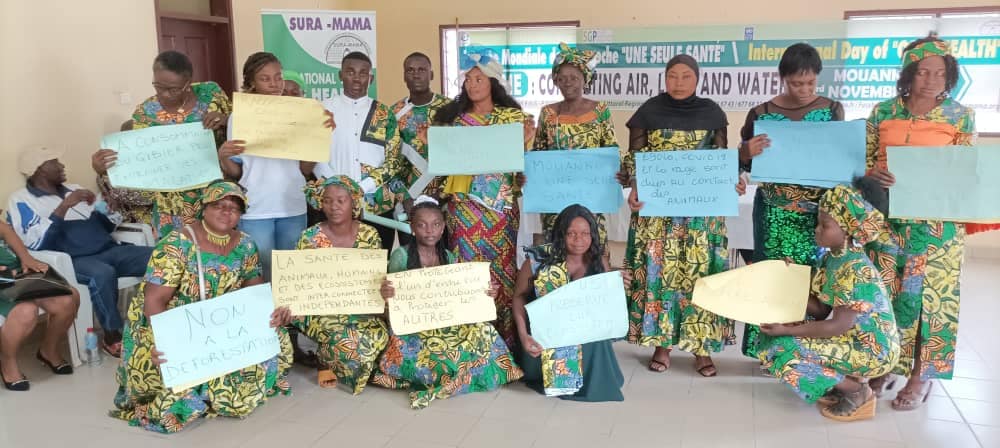
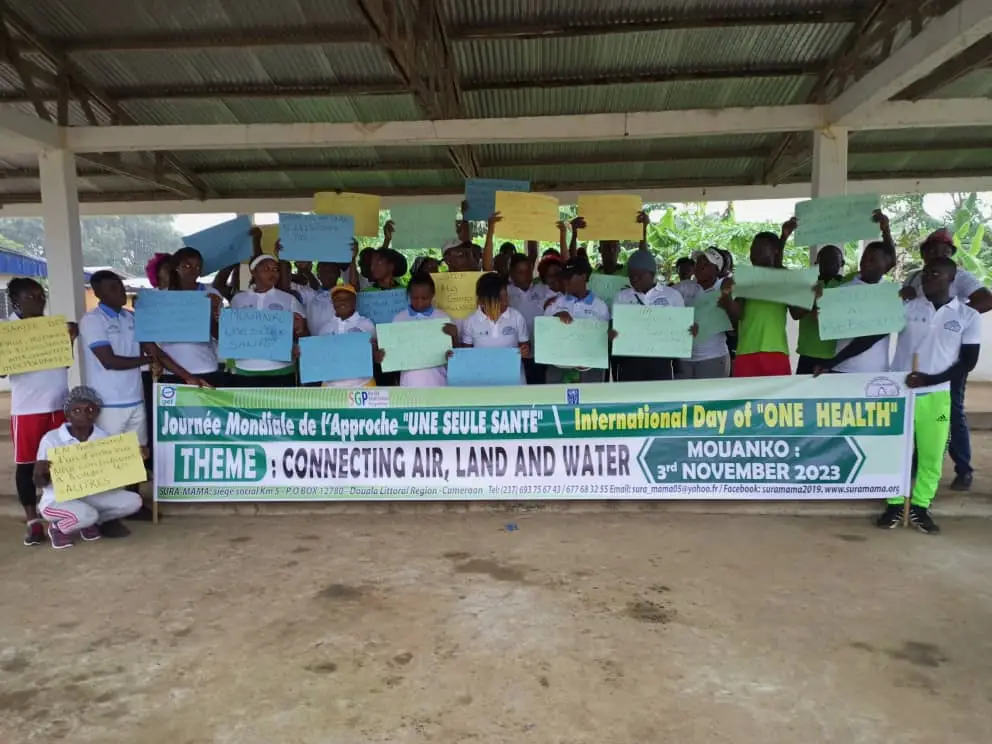
The World One Health Day in Mouanko was a major community event organized by the SURA-MAMA Association in collaboration with local communities, government institutions, community relay members, and environmental stakeholders. Celebrated under the theme “Connecting Air, Land and Water,” the activity brought together diverse actors committed to promoting biodiversity conservation and community wellbeing. Despite the gentle rain that accompanied the day, participants engaged in awareness sessions, public discussions, and educational activities highlighting the strong link between human health, animal health, and the environment.
The event served as a practical platform to explain the One Health concept, encouraging communities to reflect on daily practices that affect ecosystems, wildlife, and public health. Through sensitization messages, visual demonstrations, and community participation, SURA-MAMA and its partners reinforced the importance of sustainable behaviors, disease prevention, and environmental protection. This celebration not only strengthened collaboration among stakeholders but also empowered local populations to become active actors in safeguarding biodiversity and improving the well being of present and future generations.